
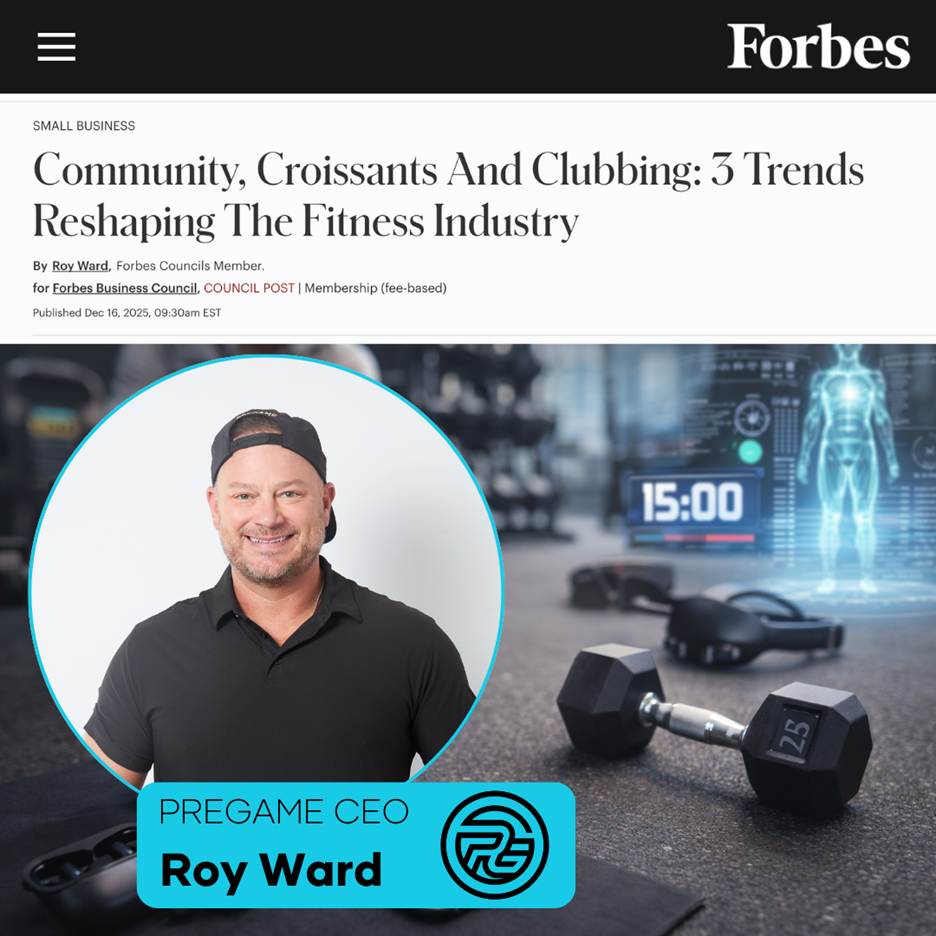
By Roy Ward,
Forbes Councils Member.
for Forbes Business Council COUNCIL POST | Membership (fee-based)
Roy Ward is the President/CEO of PREGAME.
At Coachella, the party doesn’t start until after sunrise yoga. In New York City, marathoners are stopping mid-race for croissants. And across the country, the fitness brands winning market share aren’t the ones making you feel guilty about skipping leg day—they’re the ones making you feel good about showing up at all.
This isn’t just a quirky trend. It’s a fundamental shift in how consumers today engage with wellness, and it’s creating a lucrative opportunity for businesses willing to rethink what “fitness” means in 2026.
The Role Of The Loneliness Economy
After years of Zoom workouts and algorithm-driven connections, something broke. Despite being more digitally connected than ever, consumers report feeling more isolated. The U.S. Surgeon General dubbed loneliness an epidemic, citing thatthe mental health implications are equivalent to smoking 15 cigarettes a day.
For business leaders, this means consumers are actively seeking spaces that offer genuine human connection—and they’re willing to pay premium prices for experiences that deliver it. Successful businesses aren’t selling workouts or wellness products—they’re selling community. And that’s a stickier, more valuable proposition than any fitness app can offer.
Key Trends Reshaping The Fitness Industry
Here are three trends that I believe have brought us to where we are today:
The De-Gamification Of Endurance Sports
For decades, the running industry optimized for performance: PRs, splits, pace charts. Everything was quantified, tracked and compared. But a counter-movement is gaining momentum. Events like the aforementioned “Bakery Run” in New York City are stripping away the pressure and adding back the joy.
These aren’t events for elite athletes. They’re designed for the “wellness curious,” people who might enjoy movement if it weren’t wrapped in intimidation and competition. The business model is brilliant: Lower the barrier to entry, increase participation and build a community that keeps people coming back. When your retention engine is friendship rather than guilt, churn plummets.
Read More
The Wellness-ification Of Nightlife
The nightlife industry is being quietly infiltrated by wellness. Clubs are hosting sober raves. Festivals are adding morning meditation tents. Bars are serving adaptogenic cocktails alongside craft beer. This isn’t about replacing traditional nightlife; it’s about expanding the market to include people who want social connection without the hangover.
The genius here is in the stacking of value. When you combine social experiences with wellness benefits, you can justify premium pricing while attracting demographics that traditional nightlife has lost. The person who won’t pay $15 for a vodka soda will pay $30 for a sound bath and mocktail experience that delivers connection, wellness and Instagram-worthy moments.
The Explosion Of Health-Focused Third Places
The fastest-growing segment might be the reimagining of the “third place”—those spaces between home and work where community forms. Pickleball clubs are exploding across suburbs. Infrared sauna studios are becoming social hubs. Climbing gyms are positioning themselves as community centers.
These businesses understand something crucial: People don’t just want to exercise; they want to belong. The workout is the excuse, but the community is the product. And unlike digital communities, these physical spaces create real relationships that drive retention rates traditional gyms can only dream of. Members aren’t just paying for access to equipment; they’re investing in their social infrastructure.
What This Means For Business Leaders
The businesses capitalizing on this shift are leading with inclusive, authentic messaging that feels like permission, not pressure. The tone shift from “no pain, no gain” to “all movement counts” isn’t soft, it’s strategic. If you want to join them, here are some tips:
1. Lower barriers to entry.
Instead of targeting the already-converted wellness warriors, design experiences for the curious, the intimidated and the “I’ll try anything once” crowd. This dramatically expands your total addressable market.
2. Build community.
Think of this as your new core retention engine. When your members are friends, they don’t cancel memberships because they’d be letting down their people.
3. Creating genuine third spaces.
The goal is to address the loneliness epidemic while driving revenue. This isn’t charity, it’s smart business that solves a real market need.
4. Stack value.
Social connection plus wellness plus joy justifies premium pricing that pure fitness never could.
The fitness industry’s evolution reveals a broader truth: In an increasingly isolated world, businesses that facilitate genuine human connection while delivering tangible value will win. The brands adding pastries to marathons aren’t diluting their offering—they’re understanding their real product. And it was never about the workout. It was always about how it makes you feel.
Read the article as it was published to Forbes Business Council